

If you’re riding a bike in Houston, you have certain legal rights. In fact, Texas law generally gives cyclists the same rights as drivers. That means motorists are expected to share the road, follow traffic laws, and use reasonable care around people on bicycles. But after a car hits you while you’re riding your bike, insurance companies may still look for reasons to place fault on you. Understanding Texas bicycle laws can help you protect your personal injury claim. But you don’t need to figure out all the details on your own. Reaching out to a Chinatown bike accident lawyer right away can help you move forward and pursue a claim after experiencing an injury on a bike.
Ryan Nguyen is a Chinatown attorney who can help you understand your rights and fight for every dollar you deserve.
Chinatown Bike Accident Lawyer Sets the Record Straight: Cyclists Have the Same Rights as Drivers
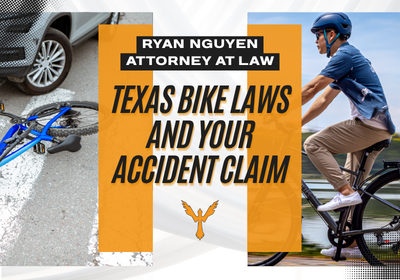 Let’s be clear: Texas law generally gives people riding bicycles the same rights and duties as drivers of vehicles. Under Texas Transportation Code Section 551.101, a person on a bicycle has the same rights and duties as a driver operating a vehicle. Simply put, cyclists are lawful roadway users. Drivers must share the road safely and comply with the traffic laws that apply to the situation.
That cuts both ways. Because cyclists share the rights of drivers, they also share the duties. Cyclists generally must use the required hand-and-arm signals for turns or stops.
Certain Bike Rules May Affect Fault
Certain rules of the road regarding cyclists may affect fault.
Section 551.103 of the Texas Transportation Code says a cyclist moving slower than traffic should ride as close as practically possible to the right curb or edge. A rider can move left or take the full lane to pass another vehicle, prepare for a left turn, dodge a pothole or a swinging car door, or avoid a lane that is too narrow for a car and bike to share safely.
In other words, riding outside the far-right edge does not automatically make a cyclist at fault.
At nighttime, Section 551.104 requires a white front light at least 500 feet ahead and either a qualifying red rear reflector or a red rear light visible at least 500 feet behind. The statute also requires a functioning brake. Not having adequate lighting while riding at night may place more fault on you, the cyclist.
In a daytime crash, a missing nighttime light will often have little or no relevance to fault because it ordinarily would not have contributed to the collision. Fault still depends on the specific evidence and whether any alleged violation caused or contributed to you being hit on your bike.
How Fault Is Decided in a Houston Bike Accident Case
Texas follows modified comparative fault under Texas Civil Practice and Remedies Code Sections 33.001 through 33.003. Your award is reduced by your share of the blame. If you’re found more than 50 percent responsible, you won’t be able to recover damages.
Insurers may try to place blame on you by reviewing the CR-3 crash report and identifying traffic code violations. Then, they’ll try to push your share of fault past that 51 percent line.
After a bike accident, you don’t need to interpret how all these rules affect your personal injury claim. Reaching out sooner to a Chinatown bike accident lawyer, such as Ryan Nguyen, can help you navigate the tricky rules and traps insurers might set.
Talk to a Chinatown Bike Accident Lawyer for FREE
Texas law gives cyclists important rights on the road, but those rights come with responsibilities. Insurers will try to place fault on you after a crash. Because Texas uses modified comparative fault, even a small dispute over what happened can affect how much compensation you may recover. Regardless, you should never assume you don’t have a case. The evidence matters, and so does understanding how Texas bicycle laws apply to your specific accident. An experienced Chinatown bike accident lawyer can investigate what happened, deal with the insurance company, and fight to protect the value of your claim.
Ryan Nguyen has spent more than 10 years fighting for injured cyclists. His practice is there when you need it, with 24/7 availability. His firm provides legal services in Vietnamese and Spanish, so you can receive services in your preferred language. He works on a contingency fee basis, which means you pay NOTHING for his services unless he wins your case! So reach out for a free consultation today.